So which of these popular red light tools actually deserves a spot in your routine: a red light therapy blanket or a red light panel setup? If you look online, you will be inundated with advice, marketing strategies, amazing promises and even sometimes false claims from both the blanket and the panel sellers. But after buying both with my own cash and living with them day-to-day, the real-world experience is completely different from what the marketing claims.
- Get the Blanket if: You want effortless, full-body cellular recovery while relaxing on the sofa watching TV. It wraps your front, back, and sides at the same time for a fraction of the cost, making it the easiest tool to use consistently every day. The blanket I used has been discontinued, but this red light blanket is virtually the same and has better spec.
- Get a Panel if: You are an athlete, runner, or rehabbing an acute injury (bad knee, tendon strain, or post-workout DOMS). Panels deliver intense, fast spot treatment directly into deep joint tissue and work far better for pets (especially cats as they can’t use their nails on the panels).
- The Hybrid Sweet Spot: Pair a full-body blanket for daily 20-minute systemic sessions with a compact high-output handheld spot panel for quick 60-second joint and facial passes.
1. Power vs. The Reality of the Dose
Let’s start with the power: the strength of the panels are undeniably way more powerful than that radiated by the blanket.
You turn them on, stand in front of them, and within a few minutes you really feel the therapeutic dose. If you’re someone who hasn’t got a baseline for what red light should feel like, that immediate physical sensation is reassuring. You feel as if you’re sat in the sunshine, and you can feel your body drinking in the red light.
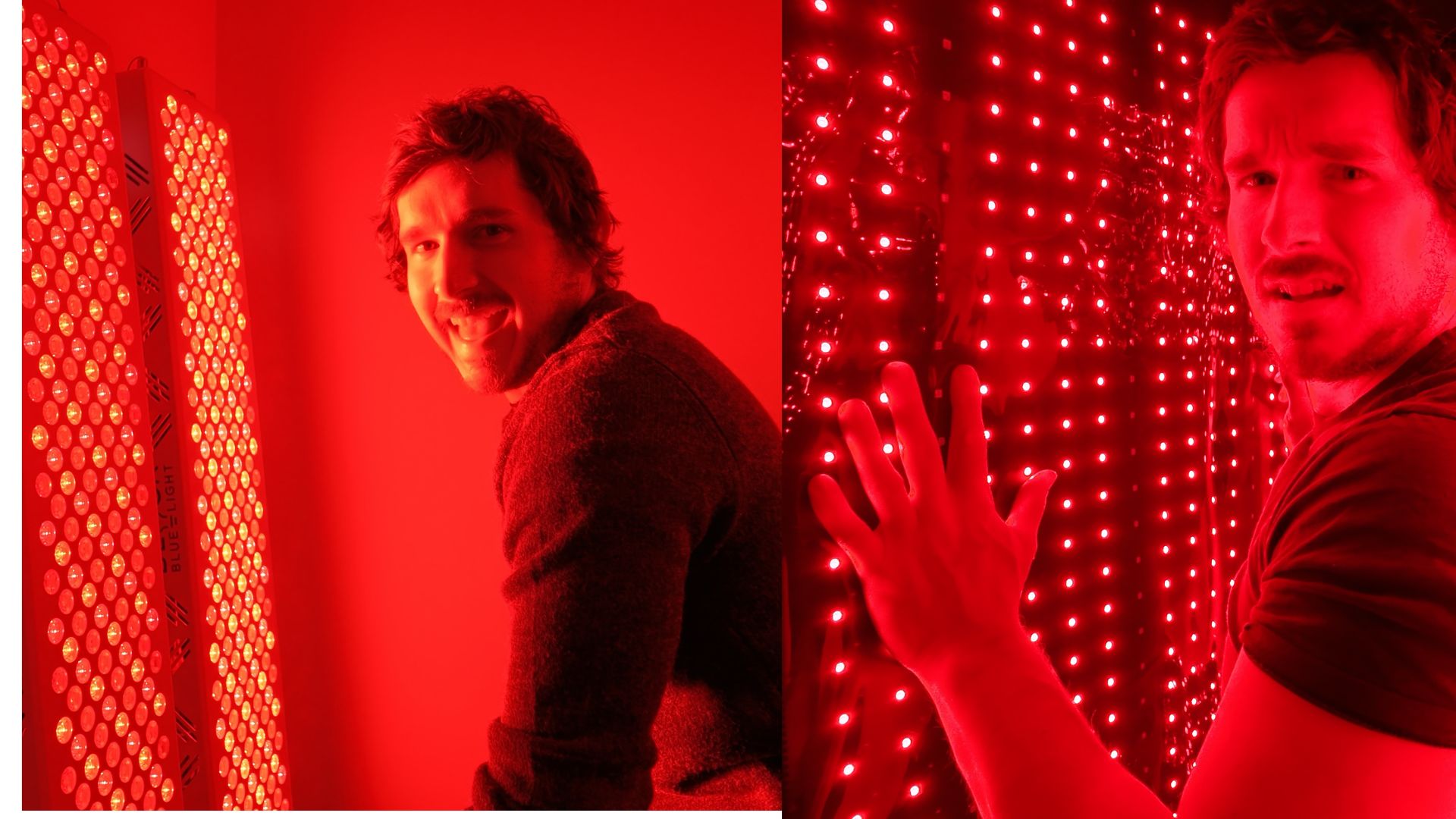
With blankets, it takes 10, maybe 30 minutes to really start feeling the therapeutic warmth build up in your body.
Power isn’t everything with red light. As long as you are hitting a therapeutic dose—which most decent panels and blankets will give you—you don’t necessarily need to chase higher power outputs and extreme irradiance numbers. It is far less about the peak intensity you get in a single flash and far more about time and consistency.
You are infinitely better off using red light most days for 10 to 15 minutes consistently at a lower output than you would be to absolutely blast your body once a week.
You can definitely overdo red light. Having more is not always better. If you get one of those crazy-powered panels and stand directly in front of it for 60 minutes, you hit cellular fatigue. You blow right past the peak mitochondrial window and end up causing more damage and oxidative stress than good.
2. Longevity, Hardware Wear & Tear
When it comes to hardware life, the panels are going to outlast the blanket physically.
I move my blanket around constantly. I drag it from the living room to the bedroom, put it on the floor, fold it up, and throw it around. Because it’s a flexible fabric device with internal wiring, all that maneuvering causes natural wear and tear over time. Even when you do your best to keep it well maintained, it takes far more mechanical abuse than a panel that just sits permanently bolted to a door mount or wall stand.
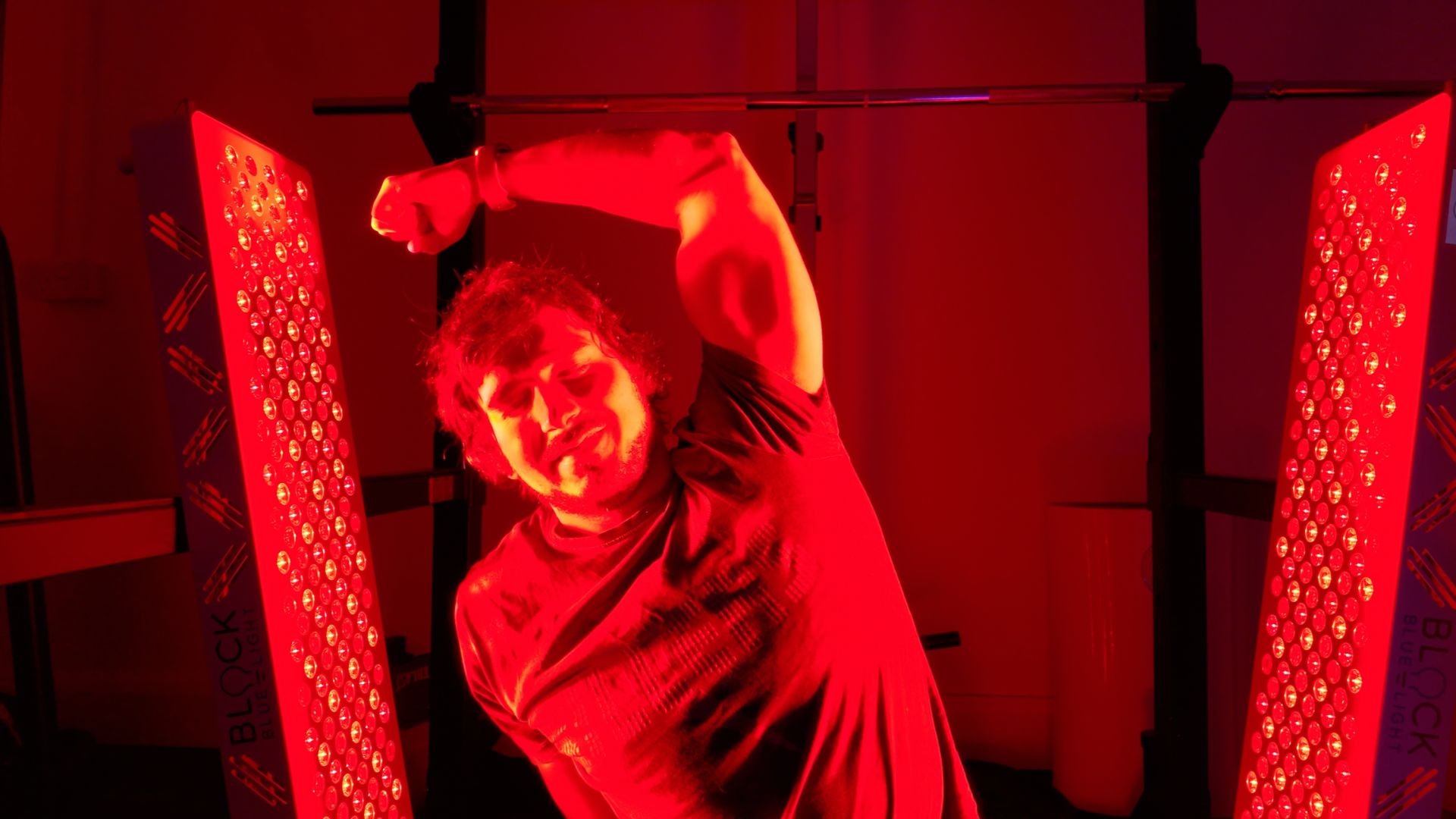
The Touchscreen Catch: While the panel’s chassis will last longer, modern panels almost all come with touchscreens. Touchscreens on high-output electronics are renowned for glitching and malfunctioning. The red light blanket I used and recommend, on the other hand, uses a really simple button system. There are fewer complex settings, which means there is significantly less software that can go wrong.
3. Lifestyle & Usability: The Real Dealbreaker
This is probably the single biggest factor of all. Think about the amount of times you’ve bought a piece of health tech intending to use it every day: you do it for the first week or two, and then you say to yourself, “This is taking too much time,” and you neglect it.
You are better off buying something that is technically less powerful that you actually use every single day than buying something absolutely amazing that you only use once or twice because it’s a hassle.
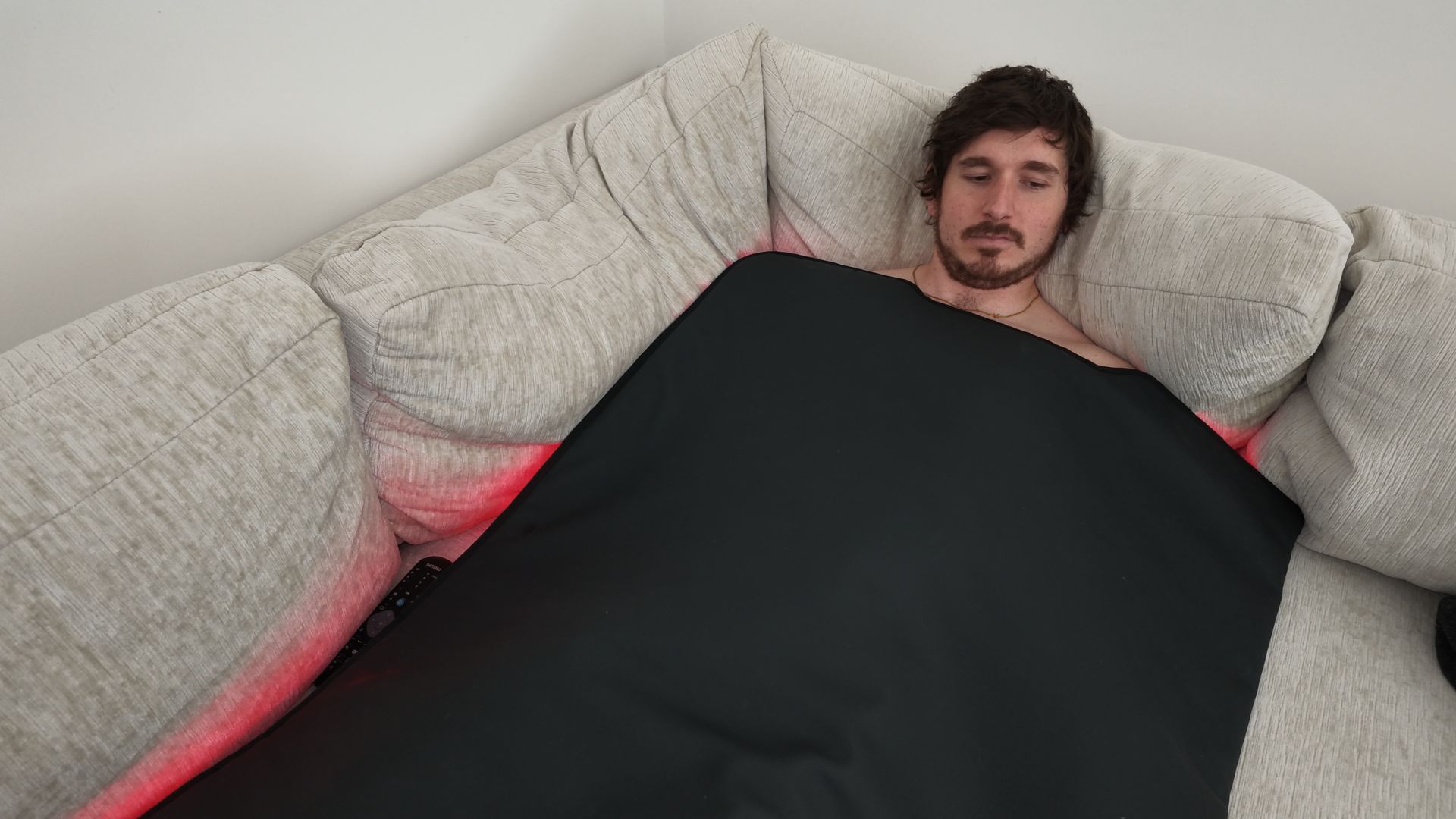
Blankets are effortless to fit into a daily schedule. There’s no real excuse to skip a session:
- Throw it on the sofa.
- Climb in at night while watching a movie or TV.
- Spend 15 to 20 minutes relaxing, meditating, or listening to music.
- Treats front, back, and sides all at once in a single session without shifting around.
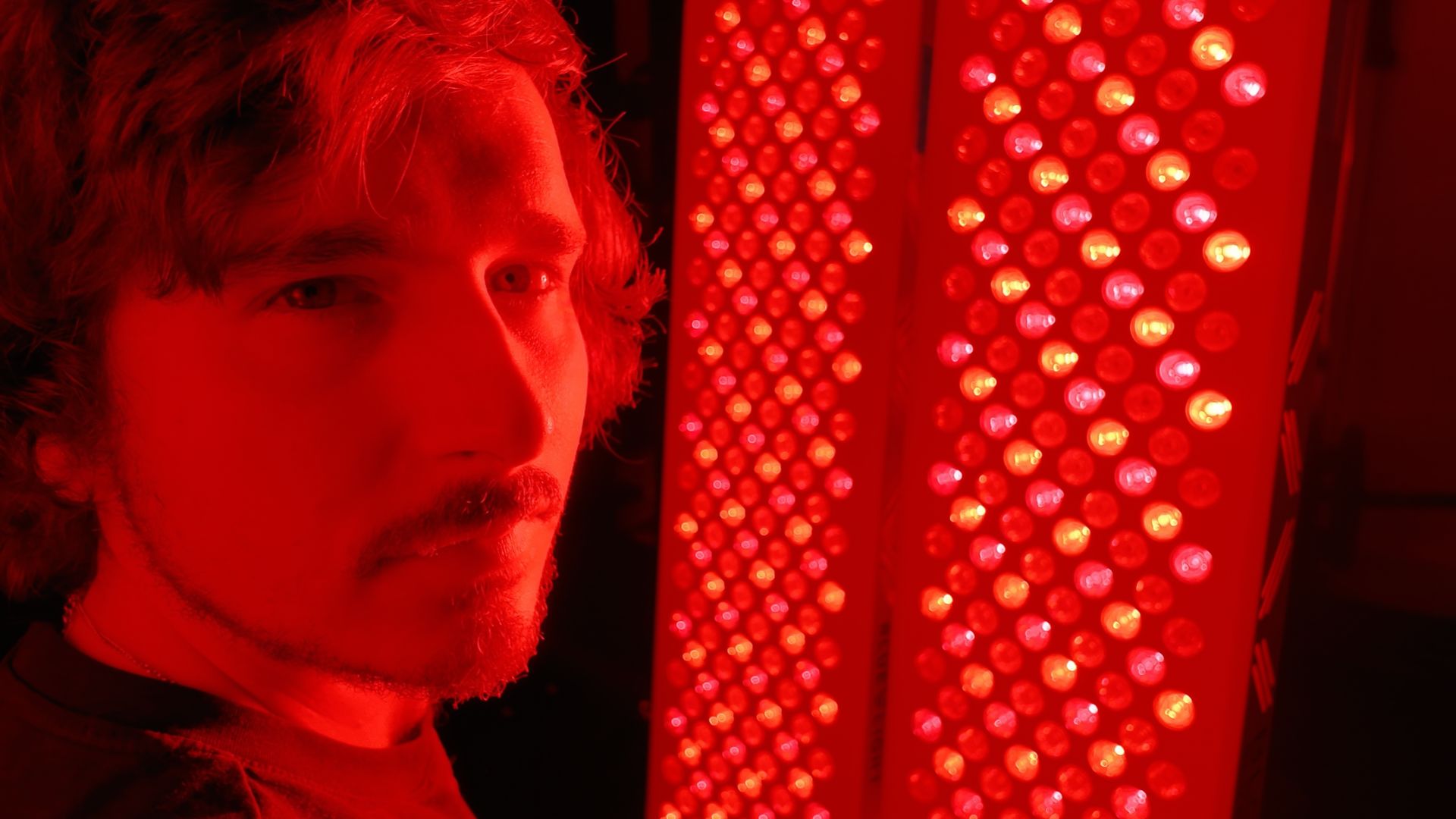
Panels force you to structure out a dedicated part of your day:
- You must stand or sit naked 6 to 12 inches away.
- You can’t easily look at your phone because the light is blindingly intense.
- You have to stand there for 10 minutes, and then spin around to do your back for another 10 minutes (depending on your setup and panel size).
- However, panels are more powerful so the results are quicker and more intense.
4. Spot Treatment & Athletic Recovery
If you’re an athlete, a runner, or somebody who trains hard, the panels are noticeably better for spot treatments.
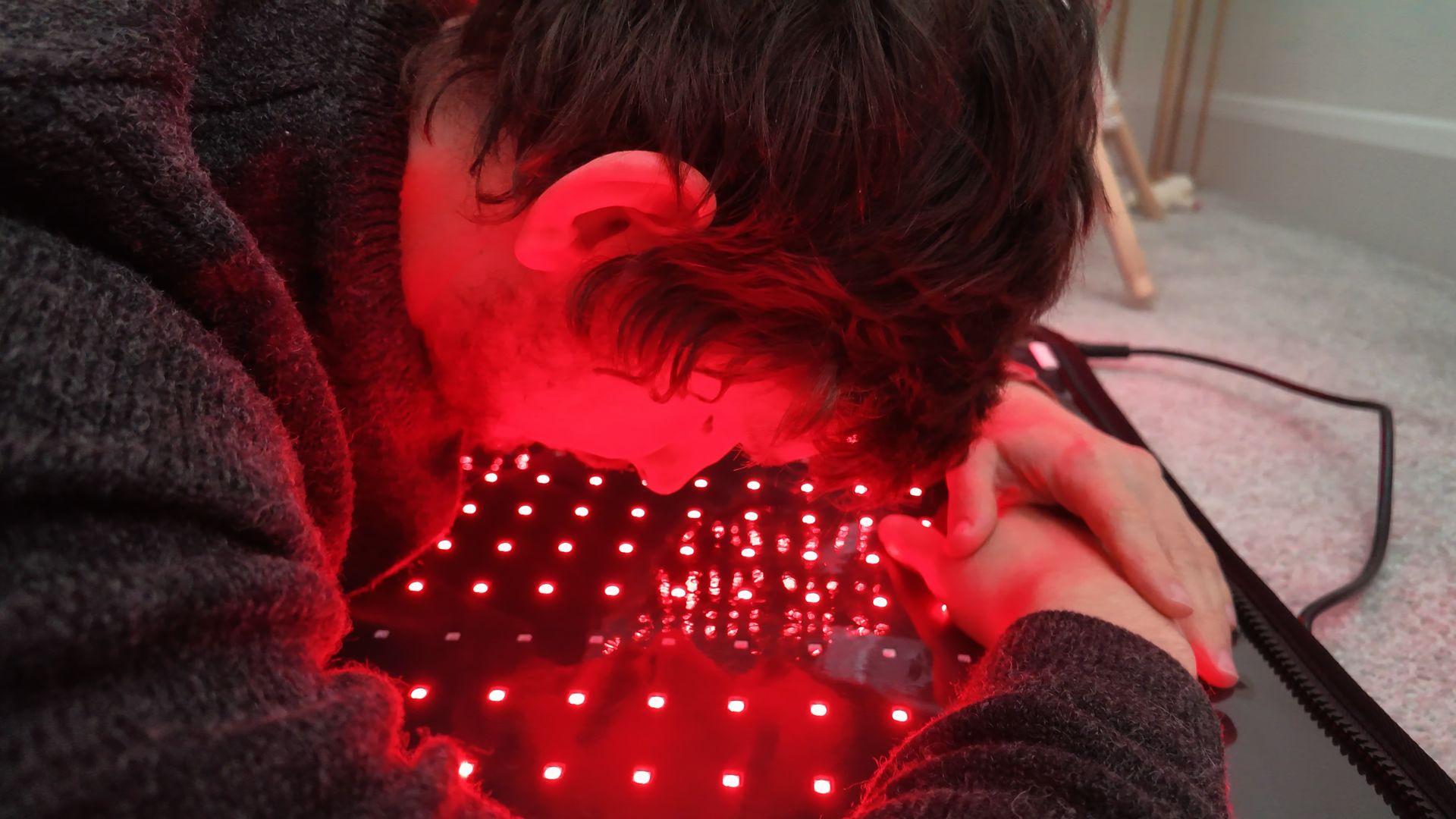
If you’ve got an acute injury, a long-term joint issue, post-op knee swelling, or severe DOMS after a brutal leg day, you can position the panel directly against that joint or muscle. The speed of the results and the localized relief is noticeably quicker than wrapping a blanket around a single limb.
5. Headaches, Eye Protection & Face Treatments
I suffer from light sensitivity, and I found that panels sometimes give me a headache from direct exposure. With blankets, your head naturally stays out, so headaches are completely eliminated.
The protective glasses that came with my panels were really not great. They were rigid, felt cheap, and every single pair I received broke across the bridge within two weeks.
The Fix: Go online and spend $5 or $6 on a pair of standard tanning bed goggles. I’ve had a single pair for over two years now, and they still work perfectly. They completely seal out direct peripheral glare (which stopped my headaches) and they won’t snap.
Note: A pair of glasses that recently came with my blanket actually had rigid temple arms (felt like stepping into The Matrix). You can see light around you, but it doesn’t pierce through. So better glasses do exist, but tanning goggles remain the most durable choice.
Can You Use the Blanket on Your Face?
A lot of people want red light for healthy, glowing skin. Yes, you can use the blanket for your face, but keep the mechanics in mind:
- If you are under 5’5″: You can slide your whole body in. Warning: Do not suffocate yourself. Always leave an opening for airflow and do it safely.
- If you are taller: Put your legs out the bottom and have your upper body inside so the blanket rests over your head.
- Claustrophobia check: If you struggle with tight spaces, getting inside a dark, warm, illuminated blanket that rests over your face is probably not for you.
6. Biohacking Pets: Cats vs. Dogs
If you want to share red light therapy with your pets to help their joints, your experience depends entirely on what pet you own:
- Cats require panels: If you try to bring a cat near a blanket, they will probably panic. Even worse, cats instinctively dig in and sharpen their claws. When I use the blanket, I have to put a protective throw over myself because my cat will jump up and try to knead her claws straight through the fabric into the LEDs. With a panel, you simply wait until they fall asleep on a chair, turn it on, and aim it at them from a few feet away. They love it.
- Dogs tolerate blankets: Dogs are usually much more chill and will often happily let you drape a blanket over them, but panels still prevent chewing and clawing risks.
7. Price & Real-World Value
To get a genuine full-body setup with panels, you are looking at mounting multiple units together on a stand, which easily climbs toward $6,000 to $10,000+.
Something nobody talks about is that these devices can malfunction. Most panels only come with a 1 to 3-year warranty. If your setup fails at year four or five, you cannot easily repair these boards yourself—meaning you might be looking at thousands to replace it.
Even if a blanket takes heavy wear-and-tear and needs replacing every 3 to 5 years, it is still exponentially cheaper than trying to replace a multi-panel rig.
If you’ve seen those ultra-expensive red light beds at commercial wellness clinics, there is no fundamental difference between them and these blankets. People will try to claim they have magical proprietary wavelengths, but at the end of the day, a therapeutic dose of 660nm and 850nm photons is a therapeutic dose. You can get the exact same cellular response with a home blanket for a tiny fraction of the price.
In terms of your money going further, the blanket wins. You treat your entire body circumference at the exact same time, rather than standing in front of a panel that only treats one side while leaving your arms and flank untreated. However, with two panels or more this con lessens and the panels are more powerful, so you need less time spent in front of your rig for more results, but at the benefit of your wallet.
The Verdict & The Ultimate Hybrid Setup
For the everyday user who wants full-body recovery, skin health, and a habit they will stick with on the sofa, a red light blanket from a reputable company that honors their warranty is the superior purchase.
If you are an athlete, run hard, or need to heal a specific post-op joint or muscle tear, and prioritize red light strength and aren’t too bothered about cost, panels are the better tool.
Instead of spending $10,000 on a giant panel rig, here is the setup I am putting together that gives you the best of everything:
- A High-Quality Full-Body Blanket: Use this as your foundation on the couch 4–5 nights a week for systemic, effortless, whole-body coverage.
- A Mini High-Output Spot Device (like this LINK): Use this as your tactical scalpel. You get point-zone treatment anywhere you want it, you can blast an inflamed knee in 90 seconds, and you can treat your face in 30 seconds without claustrophobia.
For around $1,500 total, this two-piece combination delivers exactly what your body needs.